

If you’re planning your first visit, a DC night tour offers an excellent introduction to the city’s iconic monuments before you spend your days exploring neighborhoods, museums, and local attractions. It helps you understand the city’s layout while enjoying spectacular nighttime views.
Some visitors also prefer DC night tours hotel pickup because it removes the hassle of navigating unfamiliar streets after sunset. Whether you’re staying downtown or near the National Mall, convenient transportation allows you to focus on enjoying the experience instead of worrying about logistics.
Transportation also plays an important role throughout your visit. Many travelers arriving from the airport arrange a DCA limousine service for comfortable transfers, while families planning longer vacations often include day tours from Washington DC to nearby destinations such as Mount Vernon, Annapolis, or Gettysburg. Special occasions also bring visitors to the city, making limos for prom a popular transportation choice during spring celebrations.
Whether you’re interested in American history, architecture, museums, food, or local culture, this Washington, D.C. travel guide will help you discover the best places to visit while experiencing the city beyond the typical tourist attractions.
Why Explore Washington, D.C. Like a Local?
Most travel guides focus on famous attractions, but locals know the city offers much more than government buildings and monuments. Neighborhood cafés, weekend markets, peaceful parks, art galleries, and community events provide authentic Washington, D.C. experiences that many visitors overlook.
Exploring Washington like a local means slowing down. Instead of rushing between attractions, spend time walking through historic neighborhoods, chatting with local business owners, and enjoying seasonal events. This approach creates lasting memories while offering a deeper appreciation of the nation’s capital.
Start Your Journey at the National Mall
No Washington, D.C. sightseeing adventure is complete without visiting the National Mall. This expansive green space connects many of the city’s most significant monuments, museums, and memorials.
The Lincoln Memorial, Washington Monument, World War II Memorial, Martin Luther King Jr. Memorial, Vietnam Veterans Memorial, and Korean War Veterans Memorial are all within walking distance of one another.
Walking through this area early in the morning allows you to avoid large crowds while enjoying beautiful photography opportunities. During spring, the nearby Tidal Basin becomes especially popular as cherry blossoms transform the landscape into one of America’s most photographed destinations.
Explore Smithsonian Museums
One of the greatest advantages of visiting Washington is access to the Smithsonian museums, many of which offer free admission.
Whether you’re interested in natural history, aviation, African American history, Asian art, or science, there is something for every traveler. Since these museums are extensive, locals recommend selecting only one or two each day instead of trying to visit them all.
This relaxed approach allows you to appreciate exhibits without feeling rushed.
Museum Tips
- Visit popular museums shortly after opening.
- Take breaks between exhibits.
- Read exhibit descriptions instead of simply walking through.
- Attend temporary exhibitions whenever possible.
Visit Historic Neighborhoods
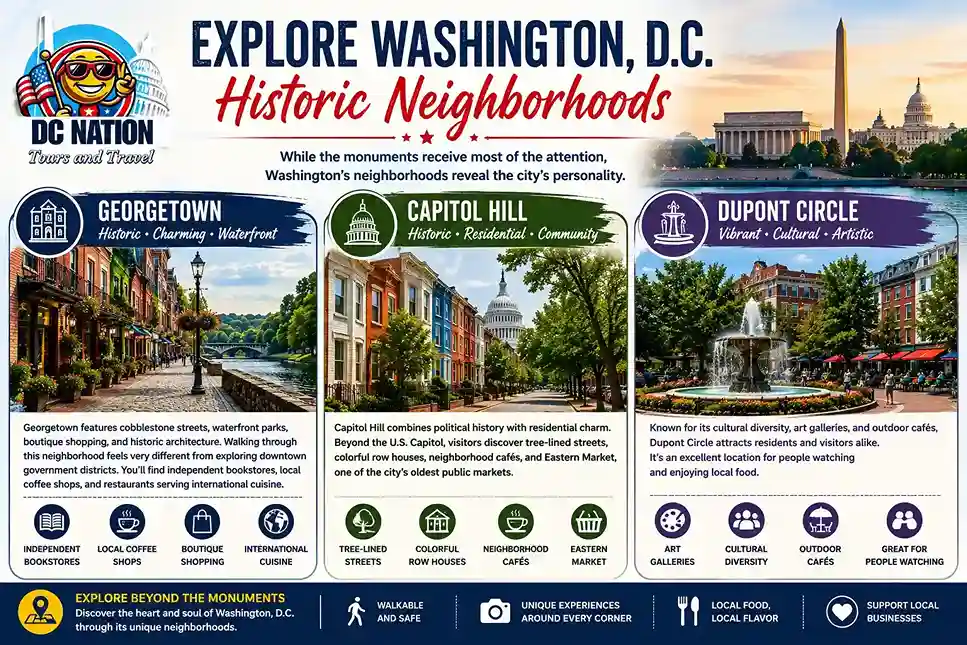
While the monuments receive most of the attention, Washington’s neighborhoods reveal the city’s personality.
Georgetown
Georgetown features cobblestone streets, waterfront parks, boutique shopping, and historic architecture. Walking through this neighborhood feels very different from exploring downtown government districts.
You’ll find independent bookstores, local coffee shops, and restaurants serving international cuisine.
Capitol Hill
Capitol Hill combines political history with residential charm.
Beyond the U.S. Capitol, visitors discover tree-lined streets, colorful row houses, neighborhood cafés, and Eastern Market, one of the city’s oldest public markets.
Dupont Circle
Known for its cultural diversity, art galleries, and outdoor cafés, Dupont Circle attracts residents and visitors alike. It’s an excellent location for people watching and enjoying local food.
Discover Hidden Gems
Every city has places beyond traditional guidebooks, and Washington is no exception.
Hidden gems include small museums, quiet gardens, neighborhood bookstores, rooftop restaurants, and scenic walking trails along the Potomac River.
Local experiences often come from wandering rather than following a strict itinerary.
You’ll discover public art, historic churches, community events, and neighborhood festivals that reveal another side of the city.
Experience Washington’s Local Food Scene
Washington’s culinary scene reflects cultures from around the world.
Instead of eating exclusively near tourist attractions, explore neighborhood restaurants offering Ethiopian, Vietnamese, Middle Eastern, Mexican, Italian, and contemporary American cuisine.
Local farmers markets provide fresh produce, handmade pastries, artisan coffee, and regional specialties.
Trying local food adds another dimension to your Washington, D.C. vacation guide.
Getting Around the City
The Washington Metro remains one of the easiest ways to explore the city.
Its clean stations, reliable schedules, and extensive network connect major attractions with residential neighborhoods.
Walking is equally rewarding because many landmarks are located close together.
Cycling has become increasingly popular thanks to dedicated bike lanes and bike-sharing programs.
Ride-share services also provide convenient transportation during evenings or after visiting neighborhoods farther from downtown.
Best Times to Visit Washington, D.C.
Every season offers unique experiences.
Spring is famous for cherry blossoms surrounding the Tidal Basin.
Summer brings festivals, outdoor concerts, and extended museum hours.
Autumn offers comfortable temperatures and colorful parks.
Winter creates a quieter atmosphere with festive holiday decorations and fewer crowds.
Choosing the right season depends on your interests rather than simply weather conditions.
Popular Ways to Explore Washington, D.C.
| Travel Style | Best For | Advantages | Considerations |
|---|---|---|---|
| Walking | Historic landmarks | Free, flexible, scenic | Requires comfortable shoes |
| Metro | Long-distance sightseeing | Fast and affordable | Peak-hour crowds |
| Guided Tours | First-time visitors | Expert information | Fixed schedules |
| Bicycle | Outdoor exploration | Eco-friendly and enjoyable | Weather dependent |
| Private Transportation | Families and groups | Comfortable and convenient | Higher cost |
Suggested One-Day Washington, D.C. Itinerary
Begin your morning at the National Mall before visiting the Washington Monument and Lincoln Memorial.
Continue to one Smithsonian museum before lunch.
Spend your afternoon exploring Georgetown or Capitol Hill.
Finish your evening by walking around the illuminated monuments while enjoying local restaurants nearby.
This itinerary balances famous attractions with neighborhood exploration.
Travel Tips for First-Time Visitors
Comfortable walking shoes make exploring easier because many attractions are close together.
Carry a reusable water bottle, especially during warmer months.
Reserve tickets early for attractions requiring timed entry.
Allow extra time between destinations because museums are larger than many visitors expect.
Use digital maps but don’t hesitate to wander through interesting neighborhoods.
Many memorable discoveries happen unexpectedly.
Why Washington, D.C. Appeals to Every Traveler
Families appreciate interactive museums and spacious parks.
History enthusiasts enjoy centuries of American heritage.
Food lovers discover diverse international cuisine.
Photographers capture impressive monuments, seasonal flowers, and waterfront sunsets.
Solo travelers enjoy safe public transportation and walkable neighborhoods.
Couples find romantic evening walks among illuminated memorials.
Regardless of your travel style, the city offers something meaningful.
Frequently Asked Questions
How many days should I spend in Washington, D.C.?
Three to five days provides enough time to visit major attractions while exploring neighborhoods and local experiences.
Are Smithsonian museums free?
Yes. Most Smithsonian museums offer free admission, making them one of the best values for visitors.
What is the best way to travel around Washington, D.C.?
Walking combined with the Metro provides the most efficient and affordable way to explore the city.
When is the best season to visit?
Spring is famous for cherry blossoms, while autumn offers pleasant temperatures and fewer crowds.
Is Washington, D.C. suitable for families?
Absolutely. Museums, monuments, parks, educational attractions, and interactive exhibits make the city ideal for visitors of all ages.
Can I explore Washington, D.C. on a budget?
Yes. Free museums, public memorials, walking tours, parks, and affordable public transportation help visitors experience the city without spending heavily.
Conclusion
Exploring Washington, D.C. like a local transforms an ordinary vacation into an unforgettable journey through history, culture, architecture, and community. Beyond the iconic landmarks, you’ll discover welcoming neighborhoods, hidden gems, authentic dining experiences, and scenic public spaces that reveal the city’s true character.
Whether you’re visiting for a weekend or planning an extended stay, balancing famous attractions with neighborhood exploration creates a richer experience. Take time to walk, interact with locals, visit museums, enjoy cultural attractions, and embrace the slower pace that residents appreciate every day. By doing so, you’ll leave not only with photographs of monuments but also with meaningful memories of America’s capital.