1. Take Advantage of Washington, DC’s Free Attractions
One of the easiest ways to save money in Washington, DC, is to explore its many free attractions. The National Mall features famous monuments and memorials, including the Lincoln Memorial, the Washington Monument grounds, and the World War II Memorial. Walking around these historic landmarks allows you to experience the city’s heritage without spending money on admission.
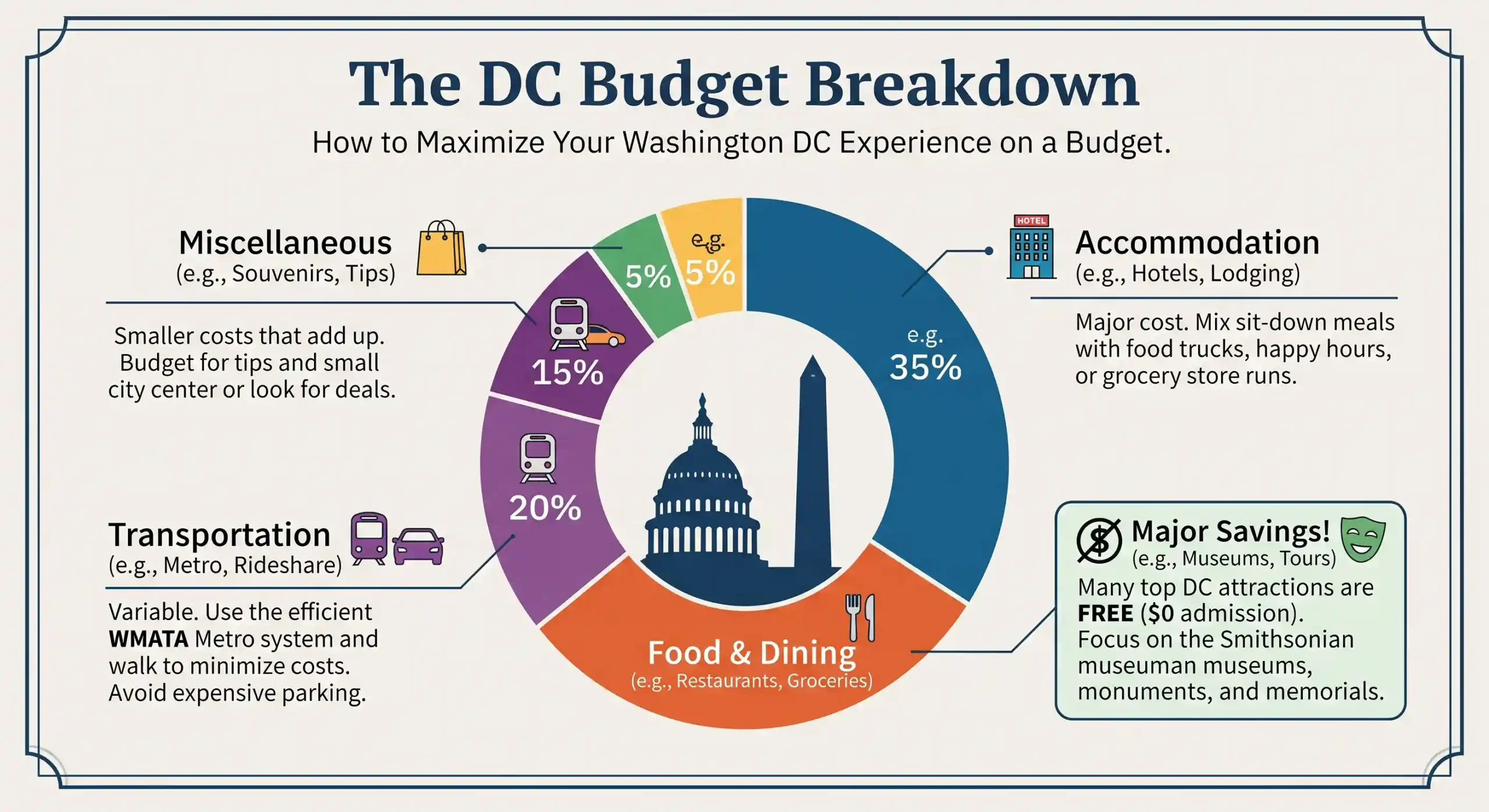
Many Smithsonian museums also offer free general admission, making them ideal for travelers on a budget. You can explore the National Museum of Natural History, the National Air and Space Museum, and the National Museum of American History without paying a standard entrance fee. Check official museum websites before visiting because some locations require timed-entry reservations.
2. Plan Your Trip During More Affordable Travel Periods
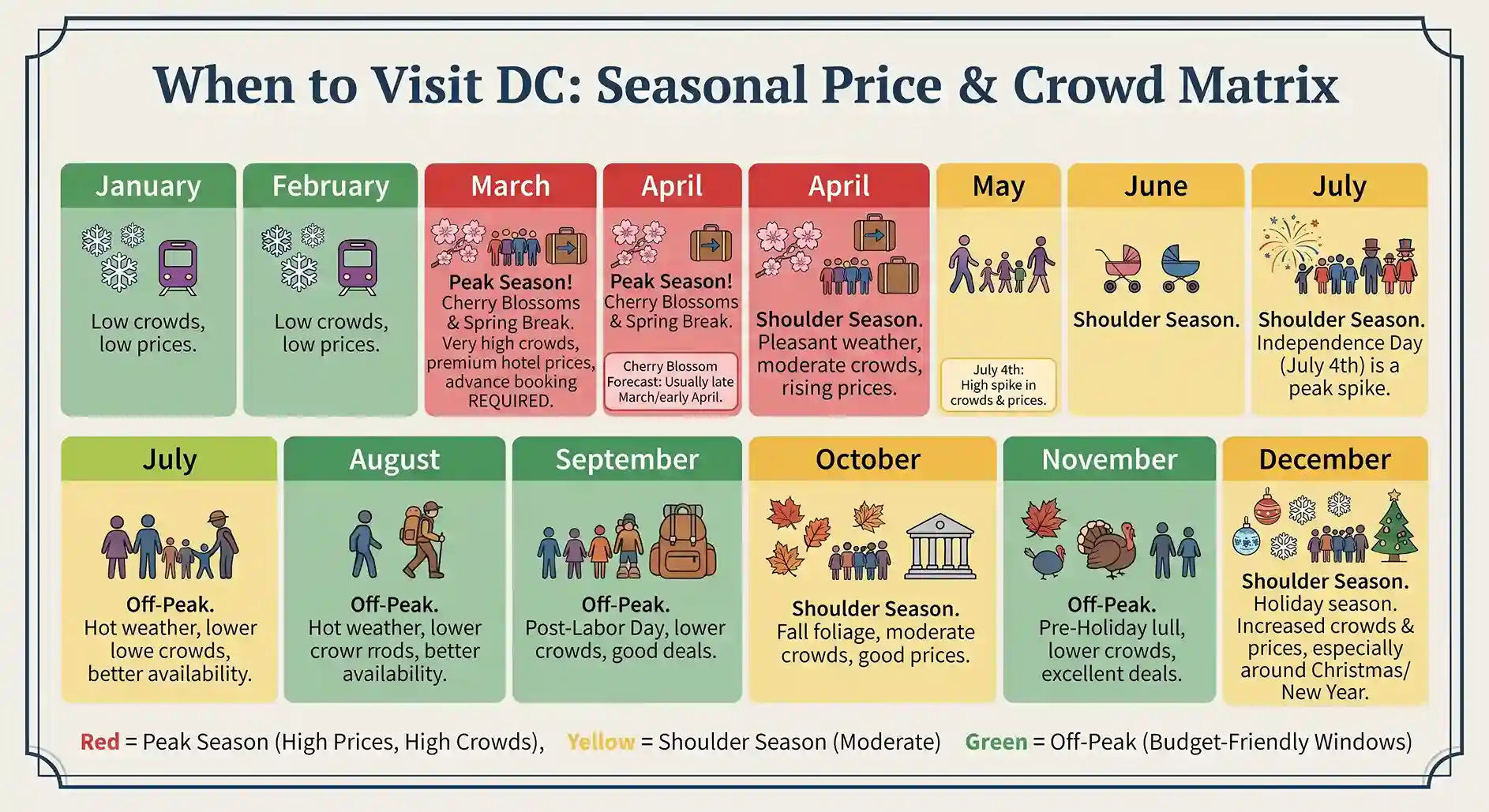
Travel dates can significantly influence the cost of your Washington, DC, vacation. Spring, particularly during the National Cherry Blossom Festival, can attract large crowds and increase accommodation demand. Major holidays, conferences, and popular event weekends may also result in higher hotel prices and limited availability.
Consider visiting during less busy periods, such as selected winter dates or quieter weeks in late summer, when accommodation deals may be easier to find. Compare prices across several dates before booking your flights and hotel. Remember that weather, special events, and local demand affect prices, so checking several options is more reliable than assuming one season is always the cheapest.
3. Choose Budget-Friendly Accommodation
Accommodation can consume a significant portion of your travel budget, particularly if you stay near major downtown attractions. Compare hotels, hostels, vacation rentals, and properties in neighborhoods outside the busiest tourist areas. A slightly less central location may offer better value, provided it has convenient access to public transportation.
Before booking, calculate the total cost rather than comparing room rates alone. Taxes, cleaning fees, parking, resort fees, and transportation to attractions can make an apparently inexpensive property more expensive. Look for accommodation with complimentary breakfast, a refrigerator, or kitchen facilities to reduce your daily food expenses.
4. Use Public Transportation Instead of Relying on Taxis
Washington, DC, has a public transportation network that can help travelers avoid expensive rides between attractions. The Metrorail system connects many popular areas, while Metrobus services reach additional neighborhoods. Using public transportation can be particularly useful when traveling between your accommodation, museums, shopping areas, and major sightseeing destinations.
Plan your route before leaving your hotel and check current fares, operating hours, and service alerts through official transit resources. Depending on your itinerary, walking between nearby landmarks may be even more economical. Instead of paying for several short rides, group attractions by location and explore each area on foot whenever practical.
5. Save Money on Food and Dining
Eating out for every meal can make an affordable DC vacation surprisingly expensive. Look for casual restaurants, local cafés, food halls, neighborhood bakeries, and lunch specials rather than choosing expensive restaurants for breakfast, lunch, and dinner. Visiting local markets can also help you discover reasonably priced meals while experiencing the city’s food culture.
If your accommodation includes breakfast, take advantage of it before starting your day. Carry a reusable water bottle and keep convenient snacks with you to avoid frequent impulse purchases. You can still enjoy a memorable restaurant meal during your visit by choosing one or two special dining experiences and keeping other meals simple.
6. Explore Museums and Cultural Attractions for Less
Washington, DC, is particularly attractive to budget-conscious travelers because many of its major cultural institutions provide free admission. Museums allow you to spend several hours learning about American history, science, art, aviation, and culture without purchasing expensive attraction tickets.
Some special exhibitions, performances, and privately operated attractions may charge admission, so confirm costs before visiting. Check whether advance reservations are necessary and look for legitimate discounts for eligible visitors. If you plan to visit paid attractions, compare their individual prices and admission policies before deciding whether a package or pass offers genuine savings.
7. Compare Sightseeing Tours and Attraction Passes
Organized sightseeing can help you understand Washington, DC, more efficiently, especially if you have limited time. However, different tours include different stops, transportation arrangements, and levels of access. Compare itineraries, tour duration, cancellation policies, group sizes, and total prices before making a reservation.
A sightseeing pass may be worthwhile if you plan to visit several participating paid attractions during a short period. However, it is not automatically the cheapest option for every traveler, particularly when many of your preferred landmarks and museums are free. Calculate the cost of the attractions you genuinely want to visit and choose the option that best matches your plans.
When researching DC tours, review what each experience includes and whether its schedule suits your travel dates. A carefully chosen guided experience can save planning time while helping you discover historical details and local stories you might otherwise overlook.
8. Walk Between Nearby Attractions and Discover More
Walking is one of the most economical ways to experience Washington, DC, and it often allows you to discover interesting details along the way. The National Mall, for example, includes numerous monuments, memorials, and museums within a broad sightseeing area. Exploring nearby landmarks together can reduce transportation costs while giving you more time to appreciate the surroundings.
Wear comfortable shoes, carry water, and check the weather before beginning a long walking route. Use a map to group attractions that are reasonably close together, and allow extra time for security checks, museum visits, and rest breaks. If distances become too long, combine walking with public transportation rather than forcing yourself to cover the entire city on foot.
9. Look for Free Events, Seasonal Activities, and Public Programs
Free events can add memorable experiences to your trip without increasing your sightseeing budget. Depending on the date, Washington, DC, hosts public festivals, outdoor performances, cultural celebrations, seasonal displays, and community events. Public spaces and neighborhood areas can offer opportunities to enjoy local culture beyond the most familiar tourist attractions.
Before traveling, consult official tourism calendars, museum event listings, and local venue websites to find activities that match your interests. Check event dates, reservation requirements, and transportation options in advance. Planning around a free concert, public program, or seasonal celebration can help you build a varied itinerary without paying for an expensive attraction every day.
10. Book Transportation and Travel Services Strategically
Transportation costs can begin before you even reach your hotel. Compare flight prices, baggage charges, arrival times, and the cost of getting from the airport to your accommodation. Booking ahead when practical can provide more choices, while comparing several legitimate transportation providers helps you understand the total cost of your journey.
If you arrive at Washington Dulles International Airport, compare available options based on your destination, luggage, group size, and arrival time. Travelers can research IAD airport transportation and Washington DC airport transportation to understand the differences between public transit, shared shuttles, and private transfers. Confirm current fares, pickup instructions, travel times, and any additional fees before making a decision.
For travelers arriving late or traveling with family, a prearranged transfer may provide convenience and predictable pickup arrangements, although it may cost more than public transportation. DC Nation Tours can be a brand to consider when researching travel and sightseeing options, but always confirm the specific services available, coverage areas, and booking details before reserving.
11. Build a Smart Itinerary and Track Your Daily Budget
An organized itinerary is one of the most effective ways to control travel expenses. Instead of crossing the city several times a day, group nearby attractions and plan each day around a specific neighborhood or sightseeing area. This approach reduces unnecessary transportation costs and leaves more time for enjoying the places you visit.
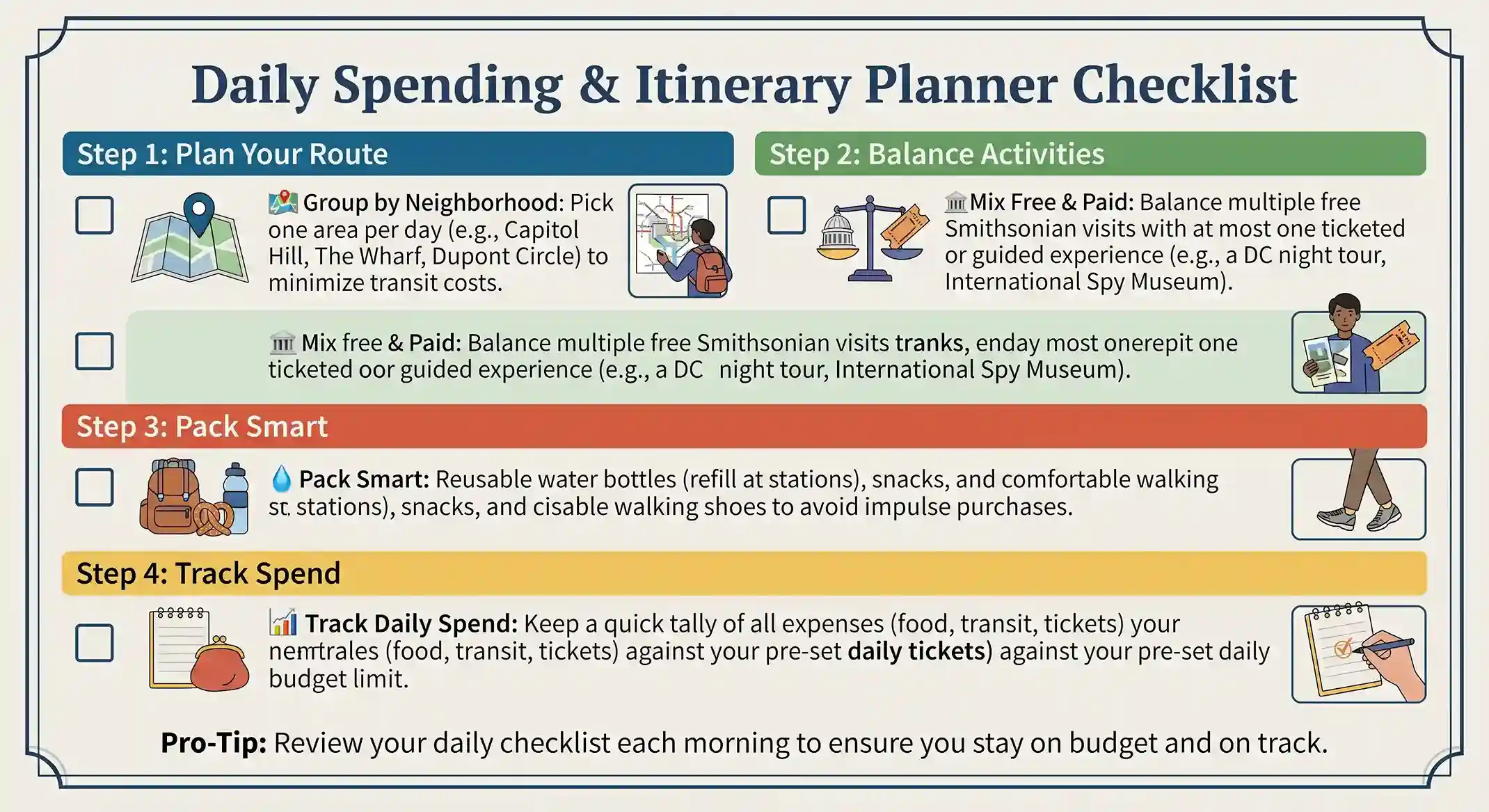
Set a realistic daily budget for meals, transportation, shopping, and paid activities before your trip. Keep track of spending as you go and leave room for unexpected expenses, such as weather-related changes or additional transportation. A simple travel budget can help you decide where to save and where spending a little extra would meaningfully improve your experience.
If you want to add an evening experience, compare the itinerary and price of a DC night tour with the cost of exploring independently. A guided evening activity may offer a convenient way to see illuminated landmarks, but compare the included stops, duration, transportation, and final price before deciding. Planning ahead helps you enjoy your vacation without putting unnecessary pressure on your budget.